

291
Confirmed cases
CDC May 31 total, including Uganda linked cases
See the latest WHO-linked Ebola outbreak 2026 snapshot for DRC and Uganda, with map locations, case status, and source dates.
Current outbreak
DRC + Uganda
Virus
Bundibugyo
WHO status
PHEIC
US spread
None shown
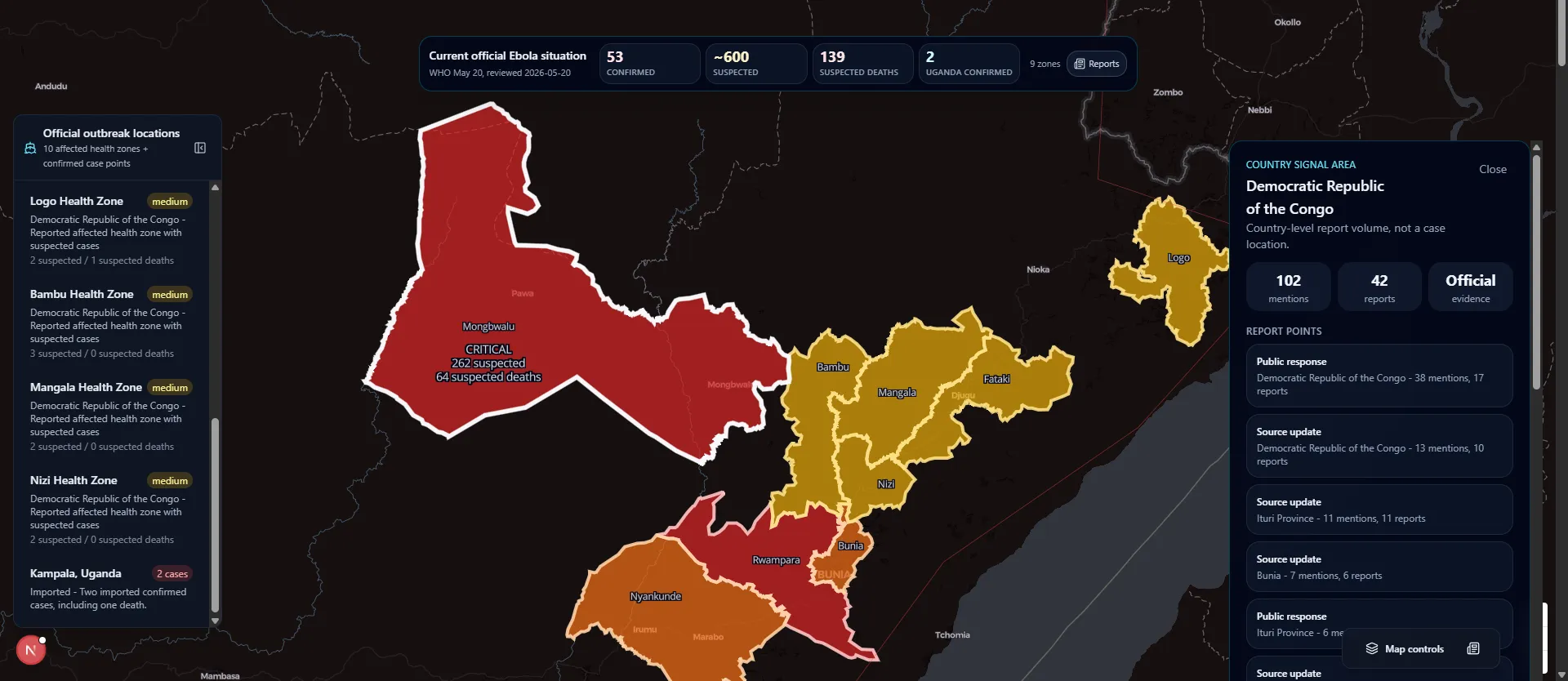
Ebola Map 2026
Current situation
Latest CDC-linked Ebola outbreak 2026 figures, separated by confirmed cases, suspected cases, and deaths.
Ebola outbreak 2026 snapshot
Source date: May 31, 2026
291
CDC May 31 total, including Uganda linked cases
220
CDC May 31 DRC suspected-case figure
43
CDC May 31 confirmed deaths
282
Confirmed
220
Suspected
42
Deaths
Areas: Ituri Province, Nord-Kivu Province, Sud-Kivu Province, Bunia, Mongbwalu, Rwampara
9
Confirmed
N/A
Suspected
1
Deaths
Areas: Kampala, Wakiso
What happened
Key Ebola outbreak 2026 milestones from first alert to WHO emergency declaration.
The Ebola outbreak 2026 started as a high-mortality illness cluster in Mongbwalu Health Zone, Ituri Province, DRC.
Laboratory testing in Kinshasa confirmed Bundibugyo virus disease on May 15, anchoring the Ebola outbreak 2026 diagnosis.
Ebola outbreak 2026 crossed borders with imported cases in Uganda, and WHO classified the DRC and Uganda outbreak as a PHEIC.
For Ebola outbreak 2026, watch for new confirmed cases, health-zone spread, contact tracing updates, and vaccine or treatment guidance.
Timeline
Major public-source milestones in the DRC and Uganda Ebola outbreak 2026.
Alert
May 5, 2026
WHO received an alert that became the Ebola outbreak 2026 signal in Mongbwalu Health Zone, Ituri Province, DRC.
Field check
May 13, 2026
Ebola outbreak 2026 response teams investigated Mongbwalu and Rwampara after deaths among patients and health workers.
Confirmed
May 15, 2026
Testing confirmed Bundibugyo virus disease, and DRC declared the Ebola outbreak 2026 event as its 17th Ebola disease outbreak.
Cross-border
May 15-16, 2026
Uganda confirmed two imported Ebola outbreak 2026 cases from DRC, including one death, in Kampala.
PHEIC
May 17, 2026
WHO classified the Ebola outbreak 2026 in DRC and Uganda as a Public Health Emergency of International Concern, but not a pandemic emergency.
Risk context
May 18, 2026
For the Ebola outbreak 2026 response, WHO cited insecurity, displacement, high mobility, urban hotspots, and no approved Bundibugyo-specific vaccine or treatment.
Scale update
May 31, 2026
CDC's May 31 update reported 220 suspected cases and 282 confirmed cases in DRC after reclassification, plus 9 confirmed Uganda cases linked to the outbreak.
Tracker review
June 1, 2026
The tracker folds May 21-June 1 public reporting into the DRC and Uganda country outlines while keeping local map points limited to source-supported outbreak locations.
Key questions
Fast answers for Ebola outbreak 2026 risk, travel context, and how to read this tracker.
Risk and travel
Ebola outbreak 2026 risk depends on exposure, location, and role. Use official guidance before travel or clinical decisions.
Low risk unless you have direct exposure
Ebola outbreak 2026 does not spread casually through air, water, or routine public contact. Risk rises with direct contact with body fluids, contaminated materials, unsafe burials, or infected animals.
Check notices before booking or departure
CDC has travel health notices for DRC and Uganda during Ebola outbreak 2026. Travel decisions should account for affected areas, screening rules, local advisories, and access to care.
Escalate suspected exposure immediately
Ebola outbreak 2026 healthcare and response work needs strict infection prevention and control, PPE protocols, rapid isolation, laboratory testing, contact tracing, and public health coordination.
Focus on contact tracing and safe care
Ebola outbreak 2026 control depends on early detection, contact follow-up, safe and dignified burials, infection control in clinics, laboratory services, and clear community communication.
Symptoms and exposure
Ebola outbreak 2026 symptoms can look like many infections. The urgent question is whether symptoms follow a plausible Ebola exposure within the 2 to 21 day incubation window.
Early Ebola outbreak 2026 symptoms can include fever, intense weakness, muscle pain, headache, and sore throat. Later symptoms may include vomiting, diarrhea, rash, impaired kidney or liver function, and bleeding in severe cases.
Incubation
2-21 days after exposure
Early signs
Fever, weakness, aches
Red flags
Vomiting, diarrhea, bleeding
Treat symptoms as more urgent if any of these happened recently:
Sources and disclaimer
Ebola outbreak 2026 notices and emergency status
Ebola outbreak 2026 official case-count update
Ebola outbreak 2026 situation and travel context
Ebola outbreak 2026 regional public health response
Ebola outbreak 2026 national and local reporting
Reviewed Ebola outbreak 2026 public signals